Adnan Menderes
Turkish prime minister who led NATO entry and was hanged after a coup.

via Wikipedia: Adnan Menderes · see source
Adnan Menderes was a Turkish politician who served as Prime Minister of Turkey between 1950 and 1960, and one of the founders of the Democrat Party (DP). He is known for overseeing a period of economic growth with Marshall Plan aid, leading Turkey into NATO, and for his authoritarian rule, which ended with his overthrow in the 1960 coup d'état and execution by hanging.
- born
- 1899, Koçarlı, Aydın
Verified Timeline
Lore & Background
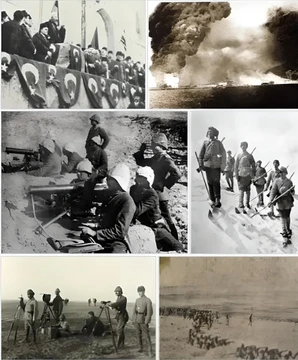
Adnan Menderes was born in 1899 in Koçarlı, Aydın, to a wealthy landowner of Crimean Tatar origin. He played football, initially as a forward for Karşıyaka and later as a goalkeeper for Altay. After primary school, he attended the American College in İzmir. He underwent reserve officer training during World War I but was unable to go to the front due to contracting malaria. He fought against the invading Greek army during the Turkish War of Independence and was awarded the Medal of Independence. In 1930, Menderes organized a branch of the short-lived Liberal Republican Party in Aydın. After the party dissolved, he was invited by Atatürk himself to join the ruling Republican People's Party (CHP) and was nominated as a deputy of Aydın, elected in 1931. He graduated from the Ankara University Law School in 1935. After Atatürk's death, İnönü assumed leadership of the CHP. Menderes opposed İnönü's statist agenda, aligning with the party's liberal-conservative faction. In June 1945, Menderes, together with Celâl Bayar, Fuat Köprülü, and Refik Koraltan, demanded more political and democratic freedom in their Motion with Four Signatures. By September 1945, Menderes, Köprülü, and Koraltan were stripped of their CHP membership. On 7 January 1946, the four formed the Democrat Party (DP). The DP won 52% of the votes in the first free elections in Turkish history on 14 May 1950, and Menderes became prime minister. He later won two more free elections, in 1954 and 1957. During his 10-year term, the Turkish economy grew at a rate of 9% per annum. Turkey participated in the Korean War and was admitted to NATO in 1952. However, the economy stalled in the mid-50s, with an estimated 11% decline in GDP per capita in 1954. Menderes' government was controversial for entrenching an authoritarian regime, using state resources to harass the opposition, suppressing the press, and initiating the Istanbul Pogrom in 1955, which targeted the city's Greek ethnic minority. The 1961 Yassıada trials accused Menderes and Foreign Minister Fatin Rüştü Zorlu of planning the riots. Menderes subsequently apologized and offered compensation. On 17 February 1959, a plane carrying Menderes crashed near Rusper, Sussex; nine of sixteen passengers and five of eight crew died, but Menderes survived almost uninjured. He was on his way to sign the London Agreements on Cyprus. Menderes was overthrown in the 1960 coup d'état, tried for corruption and violating the constitution, and hanged on 17 September 1961 along with Fatin Rüştü Zorlu and Hasan Polatkan. He was the last Turkish political leader executed after a military coup. In 1990, the Turkish parliament passed a law rehabilitating Menderes, Polatkan, and Zorlu. He is one of the four political leaders of the Turkish Republic honored with a mausoleum, the others being Kemal Atatürk, Süleyman Demirel, and Turgut Özal.
Reader's Guide
Adnan Menderes remains a pivotal and controversial figure in Turkish history. As prime minister from 1950 to 1960, he led Turkey through a period of significant transformation, including initial economic growth fueled by Marshall Plan aid, mechanization of agriculture, and infrastructure development. His tenure also saw Turkey's entry into NATO and participation in the Korean War, aligning the country firmly with the Western Bloc. However, his rule became increasingly authoritarian, marked by suppression of the press, harassment of the opposition, and the violent Istanbul Pogrom against the Greek minority. The economic downturn in the mid-1950s exacerbated tensions, leading to the 1960 military coup. Menderes' execution was a watershed event, making him the last Turkish political leader executed after a coup. His rehabilitation in 1990 and the construction of a mausoleum reflect his enduring legacy as a democratically elected leader whose rule ended in tragedy, symbolizing the fragile balance between democracy and military intervention in Turkey.
Did You Know?
- Menderes survived a plane crash on 17 February 1959 near Rusper, Sussex, while on his way to sign the London Agreements on Cyprus; nine of sixteen passengers died, but he was almost uninjured.
- He played football as a forward for Karşıyaka and later as a goalkeeper for Altay.
- Menderes was awarded the Medal of Independence for fighting against the invading Greek army during the Turkish War of Independence.
- He was the last Turkish political leader to be executed after a military coup, hanged on 17 September 1961.
- In 1990, the Turkish parliament passed a law rehabilitating Menderes, along with Fatin Rüştü Zorlu and Hasan Polatkan.
Frequently Asked Questions
Who is Adnan Menderes?
Adnan Menderes was a Turkish statesman born in 1899 in Aydın who founded the Democrat Party and went on to serve as Prime Minister of Turkey from 1950 until 1960.
What were Adnan Menderes's major accomplishments as leader?
During his time in office he steered Turkey into NATO membership and presided over a notable period of economic expansion that modernized much of the country's infrastructure.
How does Adnan Menderes's story end?
A military coup in 1960 toppled his government, and he was subsequently put on trial and executed by hanging.
Why is Adnan Menderes a controversial figure in Turkish history?
While supporters credit him with economic progress and greater political pluralism, critics point to his increasingly authoritarian governance in the later years of his premiership, which alienated the military and other state institutions.
What party did Adnan Menderes establish and what did it achieve?
He founded the Democrat Party (DP), which swept to power in the 1950 elections and broke the decades-long hold of the Republican People's Party on Turkish politics.
More in Ottoman And Middle Eastern Leaders 1-20
Spotted an error? Know more?
This is a living reference — every entry is fact-audited, and reader corrections feed straight into our audit queue. Suggest an edit · See this site's audit record